
Independent educational information — adult social care in England
Support is needed. But where do you start?
Care Compass England helps adults, families and unpaid carers understand and navigate adult social care in England — from age 18 through later life. We explain what to do next, from contacting Adult Social Care and preparing for a needs assessment to financial assessments, support for carers and planning ahead.
See Where to Start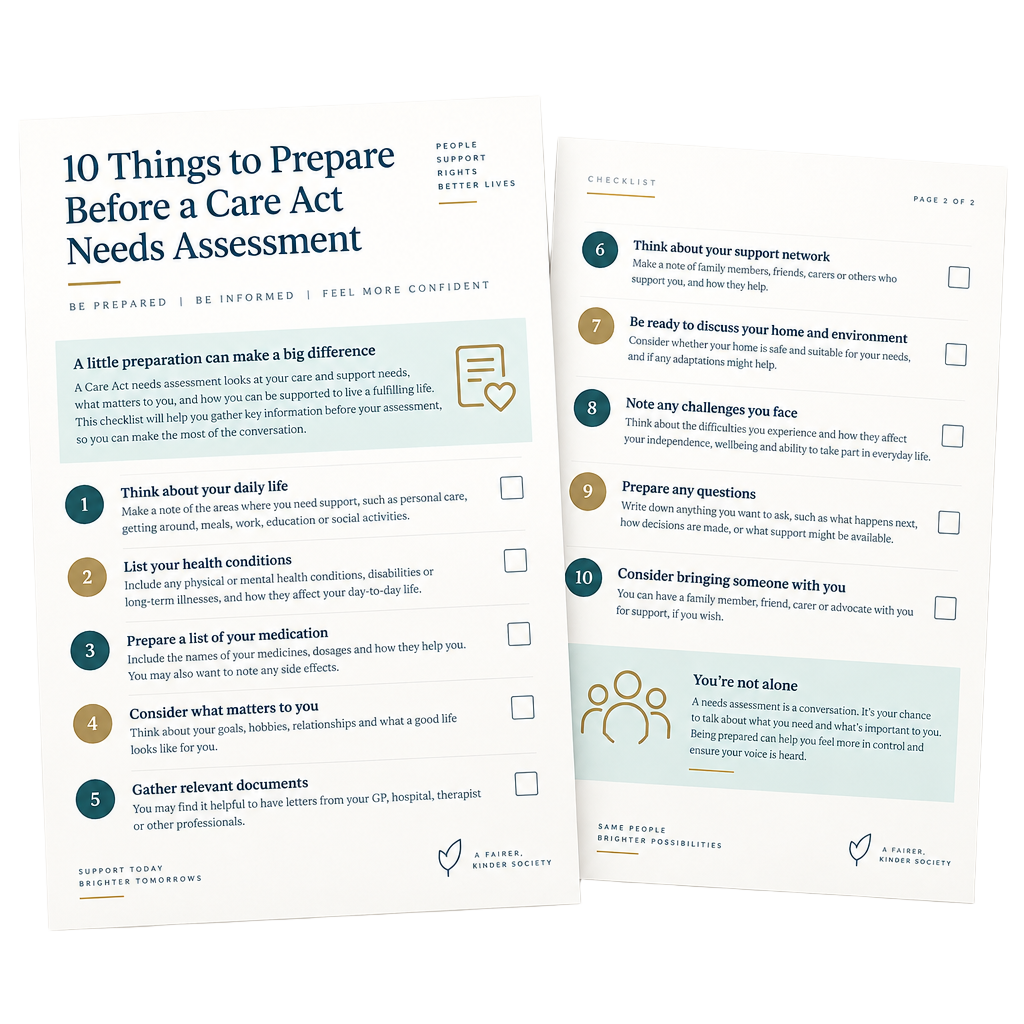
You don't need to understand the whole care system. You just need to know your next step.
Most people arrive here in the middle of something. Whatever your situation looks like today, there is a sensible first move.
Have a Care Act Needs Assessment coming up?
Preparing beforehand helps you organise important information about everyday needs and support.
FREE: 10 Things to Prepare Before a Care Act Needs Assessment
GET THE FREE CHECKLISTWho this is for
Adult social care is for anyone aged 18 or over with care and support needs. Those needs can arise from disability, learning disability, autism, physical or mental illness, ageing and many other circumstances. Having a diagnosis or condition does not by itself decide anything: a Care Act needs assessment looks at the difficulties someone actually has day to day and the outcomes that matter to them.
Adults with care and support needs
Anyone aged 18 or over who is finding daily life harder — whether that relates to disability, learning disability, autism, illness, mental health, ageing or something else.
Families and friends
People supporting a partner, parent, adult child, sibling or friend and trying to work out who to contact and what happens next.
Unpaid carers
Adult carers providing or intending to provide care may be entitled to a Carer’s Assessment under the Care Act.
Young people approaching 18
Families preparing for the move from children's to adult services can ask about transition assessments. We're building out this area next.
Does any of this sound familiar?
A disabled adult whose support no longer fits
Needs change over time. You can ask the council to look again at the support that's in place.
A young person turning 18
Children's services are ending and adult social care feels like a different world. Transition assessments exist for exactly this.
A parent who isn't managing at home
Meals are skipped, the house is harder to keep on top of, and you're not sure who to call first.
Someone who says they don't want help
You can see support is needed, but every conversation ends the same way. There are options here too.
Juggling work, family and caring
You're holding everything together and quietly running out of room. Carers have rights of their own.
Questions about residential care and property
Someone mentioned the house might have to be sold. Before you panic, understand how it actually works.
What you'll learn
Our first guide is written for someone supporting a family member or friend, and walks through the questions people ask most often, in the order they usually come up. More resources for other situations are on the way.
- Where to start when you first realise support is needed
- Who to contact — and what to say when you call
- What Adult Social Care may be able to help with
- What a Care Act needs assessment actually is
- How to prepare so the assessment reflects real daily life
- What happens after an assessment is completed
- Common misconceptions about council funding
- How financial assessments (means tests) work
- What to do when a loved one refuses support
- Support and rights for unpaid family carers
- Residential care, care home costs and property questions
- Lasting Power of Attorney and planning ahead
Clear guidance. No jargon. No scare tactics.
Clear guidance
Plain-English explanations of the steps, the words and the paperwork you'll meet along the way.
No jargon
If a term matters, we explain it. If it doesn't, we leave it out.
No scare tactics
Clear, balanced educational information without fear-based messaging or worst-case storytelling.
Know where to start. Understand what happens next.
Last reviewed: September 2026
A BROADER INTRODUCTORY RESOURCE
My Loved One Needs Support — Where Do I Start?
A free, practical starter guide for anyone in England supporting an adult who may need care and support. Written in plain English, so you can read it once and know your next step.
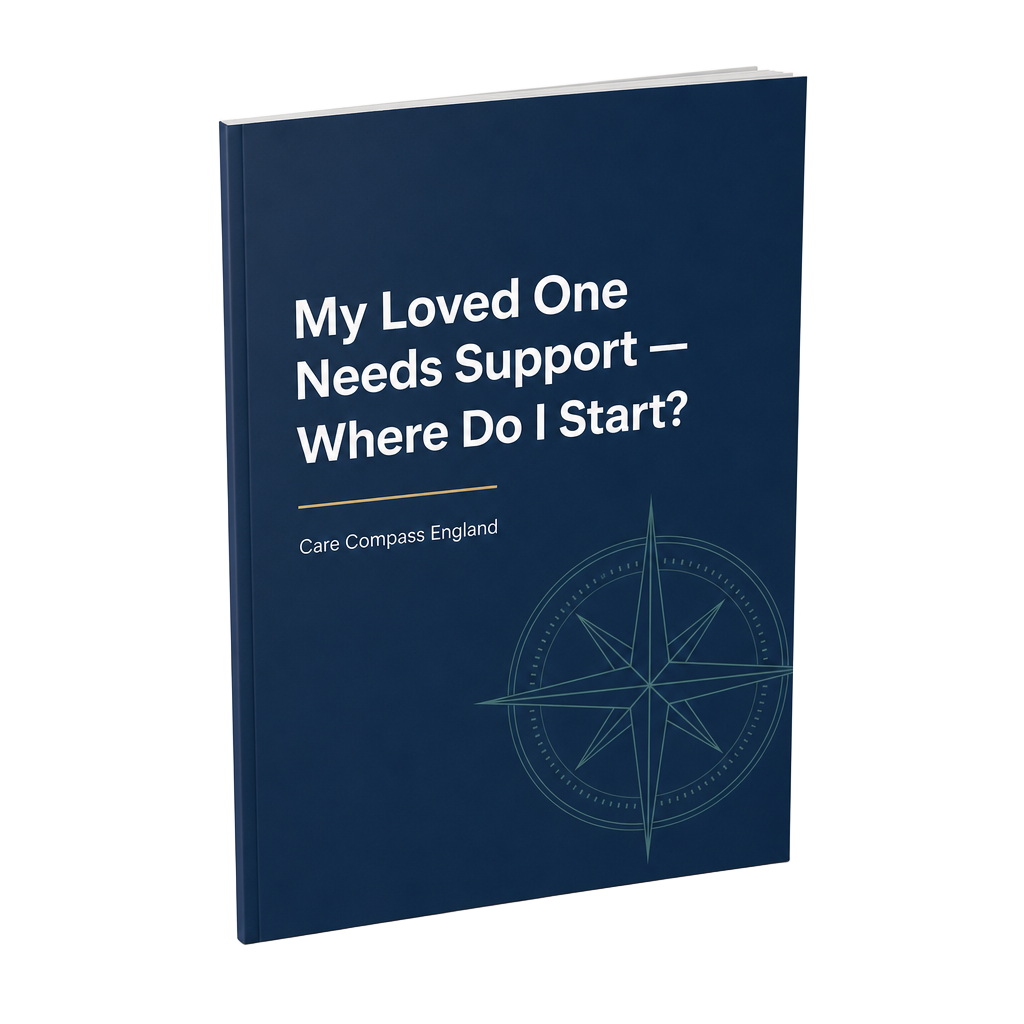
Get the free starter guide
“My Loved One Needs Support — Where Do I Start?” — a plain-English guide for anyone supporting an adult in England. Download it straight away, no sign-up needed.
Download the Free Starter GuideFree instant download. No email required.
PDF · Read it on your phone or print it. See our Privacy Notice.